Emergency & Storm Damage
Emergency Tree Removal in St. George, UT
As of August 2026, true same-day emergency tree removal in St. George, UT runs 2–3× standard rates, while urgent-but-stable work scheduled within a few days carries roughly a 50% premium. St. George Tree Care connects you with an independent local provider — and if the tree is in power lines, your first call is Rocky Mountain Power, not a tree crew.
First: Is This a True Emergency?
The honest cost question starts with triage, because the premium you pay depends entirely on which category you're in:
- Call the utility, not a tree crew: any tree or limb in contact with power lines. Rocky Mountain Power clears the line hazard first; the tree work happens after. Treat every downed line as energized, and keep people and pets away from the whole area.
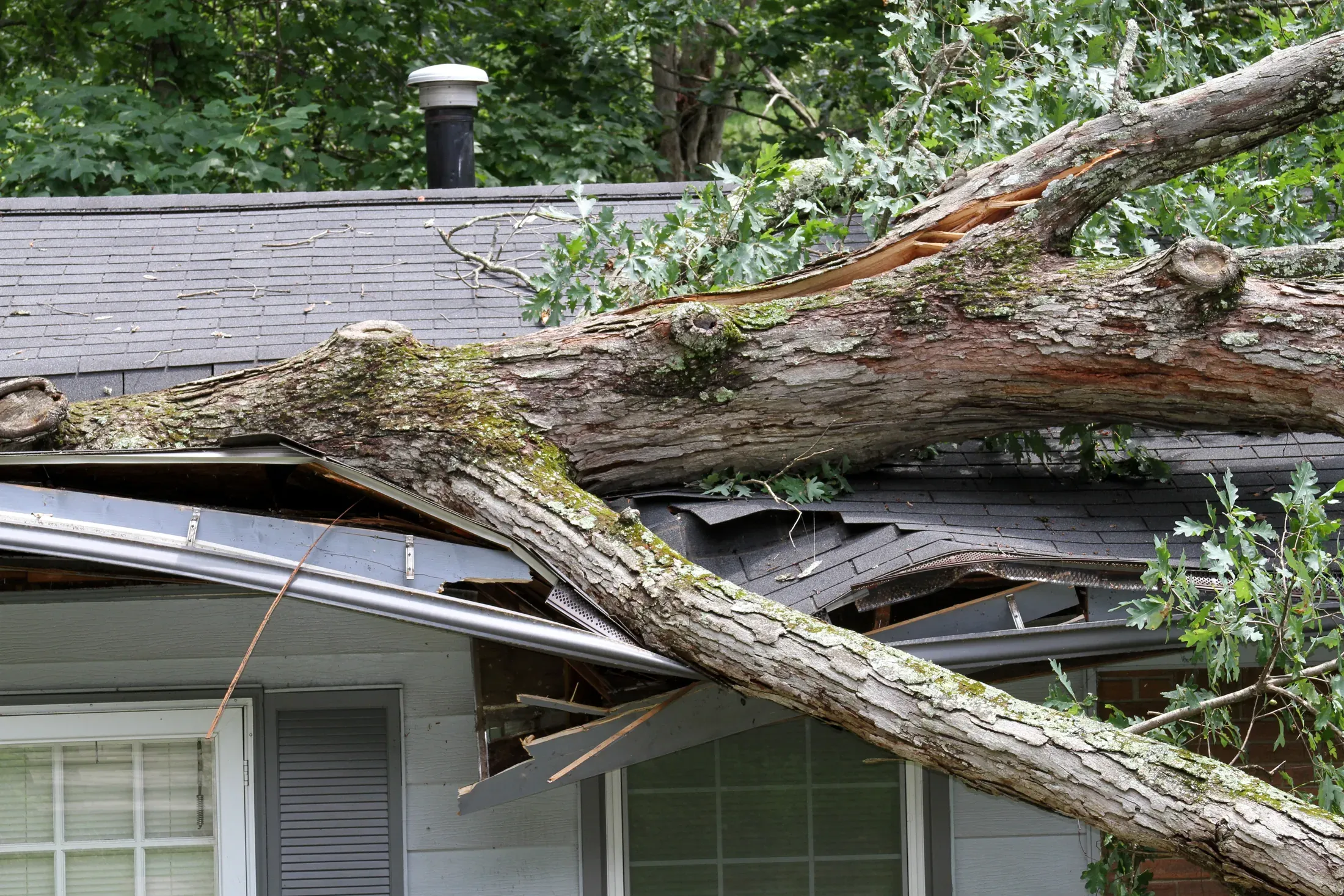
- True emergency (2–3× standard rates): a tree on the house, garage, or vehicle; a blocked driveway or access route; a hanging, partially-detached limb over anywhere people walk. Same-day or overnight dispatch is what you're buying — a crew pulled off scheduled work, often at overtime.
- Urgent but stable (≈50% premium): a leaning tree that hasn't moved since the storm, a major broken limb still firmly hung up in the canopy away from people. Priority scheduling within a few days costs a fraction of overnight dispatch — if nothing is on a structure and nothing can fall on people, this is usually the right call.
- Cleanup (standard rates): downed material on open ground. It can wait its turn — though after a big storm, the queue itself is the reason to call early.
What Emergency Work Costs Here
Emergency premiums are multipliers on the standard job, so the standard rates are still the anchor. These are the baseline, non-emergency removal ranges for St. George by tree size:
| Tree height | Typical range (St. George, UT) |
|---|---|
| Under 30 ft | $250 – $600 |
| 30–60 ft | $500 – $1,250 |
| 60–80 ft | $800 – $1,900 |
| Over 80 ft | $1,300 – $2,800 |
True same-day emergency dispatch: 2–3× these ranges. Urgent-but-stable priority scheduling: roughly +50%. Full modifiers, stump grinding, and bid-comparison guidance live in the tree removal cost guide.
Storm week is also scam week. The same red flags the vetting guidance covers get worse after a monsoon cell: door-knockers "working the neighborhood," cash-only pricing, a bid at half of everyone else's, and pressure to sign before they leave the driveway. A legitimate crew working a disaster queue doesn't need a deposit tonight to hold your spot. Insist on a written, itemized bid — what's included (limb removal, haul-off, stump, cleanup), who's insured, and when they'll actually arrive.
If insurance is involved, photograph the damage from several angles before any cutting starts, keep the itemized invoice, and confirm coverage with your insurer before authorizing more than the make-safe work. Coverage commonly turns on whether the tree hit a covered structure — and the make-safe portion (getting the tree off the roof, tarping) is usually the time-critical piece; full cleanup can follow at normal rates.
Monsoon Season Is the Local Pattern
St. George's tree emergencies cluster from July through September, when monsoon-season storms push microburst winds through the valley. The failures are predictable: codominant trunks split at weak unions, over-watered fast growers like mulberries and globe willows shed large limbs, and shallow-rooted trees in saturated ground go over whole. Winter adds a slower category — cold-snap-killed trees and palms that turn brittle and hazardous over the following year.
Most of those failures are preventable, which is the cheaper lesson: structural pruning before storm season beats emergency rates after it. The tree trimming page covers what pre-monsoon thinning and weight reduction actually involve, and the removal page covers the standing-hazard signs — a tree that's already dead, deeply split, or heaving hardscape is tomorrow's emergency at today's standard rates.
Get Emergency Tree Help
Describe what happened and what the tree is touching — a local, independent provider follows up fast; true structure-and-access emergencies get triaged first.
Frequently Asked Questions
How much does emergency tree removal cost in St. George? +
As of August 2026, genuine same-day or overnight emergency dispatch in St. George runs 2–3× standard removal rates, per published 2026 cost data — a crew is being pulled off scheduled work, often at overtime. Urgent-but-stable work handled within a few days runs roughly a 50% premium instead. Standard baseline rates by tree size are in the table on this page.
What should I do first when a tree is in power lines? +
Call Rocky Mountain Power first — a tree tangled in energized lines is not a tree job at all until the utility clears it, and no reputable crew will touch it before then. Keep everyone away from the tree, anything metal touching it, and the ground around a downed line.
Does homeowners insurance cover emergency tree removal? +
Often, when the tree fell onto a covered structure like the house, garage, or fence — policies commonly cover removal from the structure plus repairs, subject to your deductible and limits. A tree that fell in the open yard without hitting anything is frequently not covered. Policies differ, so photograph everything before cleanup starts, save an itemized invoice, and confirm the specifics with your insurer.
When do most tree emergencies happen in St. George? +
July through September, when monsoon-season storms hit the valley — microburst winds snap limbs onto roofs, split codominant trunks, and drop whole trees across driveways. Winter cold snaps add a slower second category: trees and palms that died and turn brittle over the following year.
How fast can a crew actually get there after a storm? +
For a true emergency — tree on a structure, blocked access, a hanging limb over a walkway — same-day response is realistic on a normal day. After a big valley-wide storm, every crew is triaging: structures and hazards first, everything else in the order requests came in. Getting your request in early, even for non-urgent cleanup, matters more that week than any other time of year.