Guide · Zone 8a/8b
Palm Tree Care in St. George & Southern Utah: The Year-Round Guide
Palms thrive in St. George, UT — but only the cold-hardy species, and only with care built for USDA zone 8a/8b, not for Phoenix. The short version from St. George Tree Care: one correct trim a year in June, deep infrequent water, palm-specific fertilizer for this alkaline soil, and frost protection for marginal species. As of August 2026, that annual professional trim runs $75 – $250 for most residential palms.
Why St. George Palms Need Their Own Rulebook
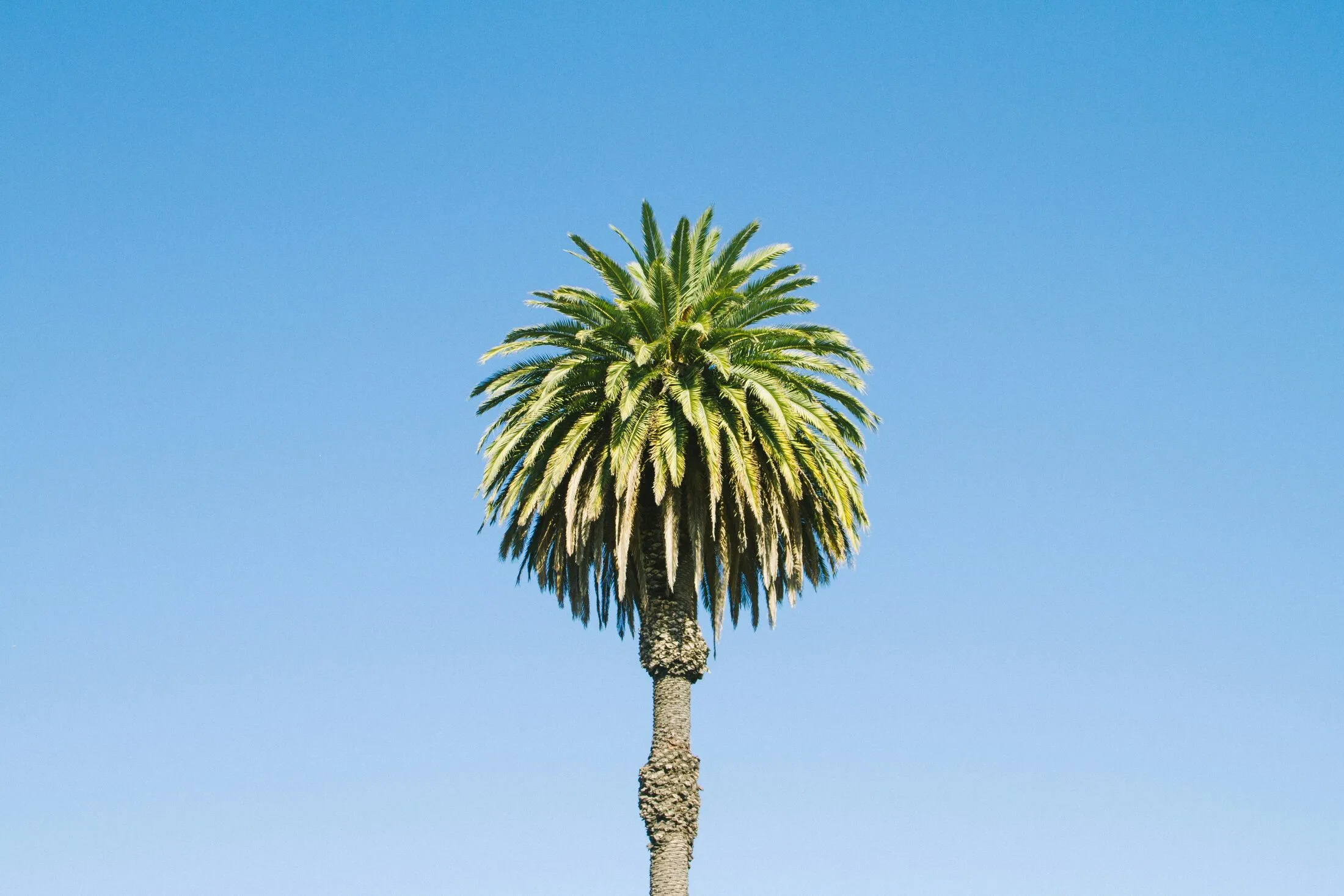
St. George sits on the northeastern edge of the Mojave — hot enough in summer for any desert palm, but with real winters: USDA zone 8a/8b means average annual lows in the 10–20°F band, and hard freezes arrive often enough that palm survival here is decided in January, not July. That's the whole story of palm care in this valley. Advice written for zone 9b Phoenix or coastal California — where nothing tender ever dies — routinely gets Southern Utah palms killed, one growing season at a time.
The valley's mature palms prove what works: the tall, thick- trunked fans shading older neighborhoods are overwhelmingly California fan palms and their hybrids, planted decades ago and managed on the calendar this guide describes. What fails is predictable too — pure Mexican fans planted for their fast, skinny elegance, hurricane-cut every fall, heading into a hard freeze with no frond insulation.
The Species That Belong Here
| Palm | Cold tolerance | Verdict for zone 8a/8b |
|---|---|---|
| Windmill palm (Trachycarpus fortunei) | Well below 10°F | The bulletproof choice — slower, smaller, handles any normal winter here |
| Mediterranean fan palm (Chamaerops humilis) | Mid-teens °F | Reliable; clumping habit, good scale for courtyards |
| California fan palm (Washingtonia filifera) | ~15–18°F | The classic St. George palm — the valley's big mature fans are mostly these and their hybrids |
| Mexican fan palm (Washingtonia robusta) | Damage near ~20°F | Marginal — survives runs of mild winters, then a hard freeze finds it; hybrids are safer |
Buying advice flows straight from that table. If you want tall and fast, choose California fan or a filifera-robusta hybrid ("filibusta") over a pure Mexican fan. If you want zero winter anxiety, windmill and Mediterranean fan are the two you never wrap. And treat anything not on this list — queen palms, pygmy date palms, majesty palms — as patio-pot plants that come inside, not landscape trees, whatever the nursery tag says.
The Care Calendar, Season by Season
Spring (March–May): assess, water up, feed — but don't cut
As nights warm, check what winter did. Browned, frost-burned fronds have been protecting the bud all winter — leave them until frost risk is fully past. Resume deeper irrigation as temperatures climb, and apply a palm-formulated fertilizer with potassium, magnesium, and manganese once soil has warmed; St. George's alkaline soil locks up exactly those nutrients.
Early summer (late May–June): the one correct trim
This is the window — after the last frost risk, at flower-stalk emergence, before peak heat. Remove dead and fully brown fronds and the flower/fruit stalks. Keep every green frond above the horizontal: picture a clock face and cut nothing higher than 9 and 3. One correct trim now is the whole year's pruning.
High summer (July–August): deep, infrequent water
Palms handle 110°F heat well if the root zone gets deep soakings — a long, slow watering that penetrates 18–24 inches every week or two in extreme heat beats daily shallow sprinkling, which grows shallow roots and salt buildup. Monsoon storms are not irrigation; check soil moisture after wind events, not just rain.
Fall (September–November): taper, don't trim
Ease watering down as temperatures fall so growth hardens off before the first frost. Skip fall pruning entirely — every frond you leave is insulation for the bud through winter, and fronds removed now won't be replaced until spring.
Winter (December–February): protect the marginal, ignore the hardy
Windmill, Mediterranean fan, and California fan palms ride out a normal St. George winter unprotected. Mexican fan palms and young palms of any species deserve help when a hard freeze is forecast — wrap the trunk and bud zone in frost cloth or burlap (never plastic against tissue), water deeply before the freeze, and unwrap when it passes. Brown fronds after a freeze are cosmetic; wait for spring before touching them.
The Two Mistakes That Kill St. George Palms
Hurricane cutting. Over-trimming a palm to a topknot removes the green fronds it feeds itself with and the insulation its single growing bud depends on. A palm has exactly one bud — there's no recovering from a killed one the way a mulberry regrows from a bad prune. The standard is the 9-to-3 rule: on an imaginary clock face, keep every frond above the horizontal line from 9 to 3. Dead brown fronds and fruit stalks come off; green fronds below the line stay unless they're a genuine hazard.
Winter panic pruning. After a hard freeze, burned brown fronds look terrible — and they're doing their most important work, wrapping the bud against the next freeze. Palms that get "cleaned up" in January routinely die from the February cold snap that follows. Leave frost-damaged fronds until the last frost risk passes, then take them in the normal June trim.
Both mistakes usually arrive via a low bid. The palm trimming page covers pricing ($75 – $250 for most residential palms as of August 2026) and what a correct trim includes — and skinning, the optional $100–$300-per-palm trunk cleanup whose real case is fire-risk and pest-habitat reduction. When you're comparing crews, the local companies guide has the vetting checklist; a crew that proposes hurricane cutting has already failed it.
After a Hard Freeze: How to Tell If a Palm Made It
Every few winters, St. George gets a freeze hard enough to brown entire crowns — and every following spring, palms get removed that were going to live. Browned fronds tell you nothing by themselves; the only part of a palm that has to survive is the single growing bud at the top of the trunk. The test is the spear pull: in spring, grasp the newest central spear frond and tug gently. If it holds firm, the bud is likely alive. If it slides out wet and rotten, the bud is in trouble — though even then, some palms push new growth by mid-summer. Treat a suspect bud gently: many growers pour a copper-based fungicide into the crown after a spear pull to slow rot while the palm tries to recover.
The honest rule for a freeze-damaged palm: give it until June before deciding anything. New green spears emerging means it made it — trim the dead fronds in the normal window and move on. No new growth by mid-summer means the palm is gone, and at that point it's a removal job — see the removal cost guide for what palm removal runs — not a wait-and-hope through another winter with a dead, drying fire ladder standing next to the house.
Feeding and Watering an Alkaline Desert Soil
St. George soil is alkaline enough to lock up the three nutrients palms need most — potassium, magnesium, and manganese — which is why palms here yellow on soil that grows everything else fine. Potassium and magnesium deficiency show first on the oldest fronds; manganese deficiency shows on the newest growth ("frizzle top") and is the one that can kill the bud if ignored. The fix is boring and works: a palm-formulated slow-release fertilizer containing all three, applied during the warm growing season, plus deep watering that flushes salts down out of the root zone rather than concentrating them at the surface.
On water itself: deep and infrequent beats shallow and daily, in every season. A newly planted palm needs frequent water its first summer while roots establish; an established palm on the 9-to-3 trim calendar and a proper feeding schedule is one of the lowest-water trees you can grow in Washington County — part of why palms fit so naturally into the water-wise conversions covered in the permits & HOA guide.
A note on moving palms rather than buying them. Palms transplant far better than broadleaf trees — their fibrous root systems regenerate from close to the trunk, which is why mature specimens get craned between properties routinely in the Southwest. The rules mirror planting: move them in late spring or early summer so roots re-establish in warm soil, keep the root ball moist and the palm braced for the first year, and accept that a moved palm sulks for a season before pushing normal growth. A mature windmill or California fan is a genuinely valuable landscape asset — if you're relandscaping around one, pricing a relocation against removal-plus-replacement is worth the phone call before defaulting to the saw.
Want It Done Right in the June Window?
Free and no-obligation — your request goes to an independent local provider who trims St. George palms every season.
Frequently Asked Questions
Which palm trees actually survive in St. George, Utah? +
The reliable four for zone 8a/8b: windmill palm (hardy well below 10°F), Mediterranean fan palm (mid-teens), California fan palm (roughly 15–18°F), and — with more risk — Mexican fan palm, which is marginal here because damage begins around 20°F, a temperature St. George winters do reach. The towering old palms around the valley are mostly California fans and hybrids that have earned their place; a newly planted pure Mexican fan is a gamble on the next hard winter.
When should palms be trimmed in St. George? +
Late May through June — after the last frost risk has passed and flower stalks have emerged, but before peak summer heat. One correct annual trim in that window is all a healthy palm needs; trimming in fall or winter removes the frond insulation the bud needs most.
What is hurricane cutting, and why is it bad? +
Hurricane cutting (over-trimming to a topknot of a few upright fronds) strips the green fronds a palm feeds itself with. It starves the palm, narrows the trunk, exposes the bud to frost and heat, and makes it more likely to fail — not less. The standard is the 9-to-3 rule: keep every frond above the horizontal, and never let a crew sell a "clean look" that removes green fronds below it.
Why are my palm's fronds yellowing? +
In St. George it's usually nutrition, not water: the alkaline desert soil here locks up potassium, magnesium, and manganese, and deficiency shows as yellowing or frizzled fronds — oldest fronds first for potassium and magnesium, newest growth for manganese, which is the dangerous one. A palm-specific slow-release fertilizer with those micronutrients, applied in the warm season, addresses all three. Persistent yellowing despite feeding is worth a professional look.
How much does annual palm maintenance cost? +
As of August 2026, the annual June trim runs $75 – $250 for most residential palms in St. George, with taller palms costing more — the full height table is on the palm tree trimming page. Optional trunk skinning adds $100–$300 per palm and is worth it mainly for fire-risk reduction and pest habitat removal, not looks.
Should I plant a palm in the fall? +
No — plant palms in late spring through early summer, once soil has warmed. Palms establish roots in warm soil, and a fall-planted palm heads into its first St. George winter with almost no root establishment, which is how marginal species die in year one. Spring planting gives a full hot season of establishment first.